The 5 Biggest Questions We Hear From Homeowners About Smoke Alarms

When it comes to smoke alarm compliance, most homeowners avoid the process until it’s crunch time.
With our help, it doesn’t have to be complicated!
Smoke alarms are one of the simplest safety devices in your home and also one of the most commonly misunderstood.
At QConnect Electrical, we’re often called out after a close call, an alarm that won’t stop chirping, or when it’s time to go to market. Here are the five biggest questions we hear from homeowners about smoke alarms.
1) “How many smoke alarms do I actually need and where should they go?”
All existing private homes, townhouses, units and manufactured homes require interconnected photoelectric smoke alarms by 1 January 2027.
In most homes, it’s not just “one in the hallway and you’re done”. Correct placement is what gives you early warning, especially at night.

Your home must have smoke alarms:
In every bedroom (or in areas immediately outside bedrooms, depending on the home layout and requirements)
In hallways connecting bedrooms
On every level of the home (including upstairs and downstairs)
Placement matters too:
Smoke alarms should be installed on the ceiling, no closer than 300mm to any wall.
Keep them away from corners, as “dead air” can delay smoke reaching the alarm.
Avoid placing them too close to bathrooms, kitchens, or ceiling fans, which can cause nuisance alarms or reduce effectiveness.
If you’re unsure, a quick on-site assessment can confirm the best locations for your specific floor plan.
2) “Why does my smoke alarm keep beeping or chirping?”
That random chirp at 2:00am is your smoke alarm trying to tell you something.
Common causes include:
Low battery (even “long-life” batteries don’t last forever)
Dust, insects, or debris inside the alarm
Humidity/steam triggering nuisance alarms
Age (all smoke alarms need replacing at the 10-year mark)
Wiring issues (for hardwired alarms)
A continuous alarm (full volume) means possible smoke detection, but a periodic chirp is typically a fault, battery warning, or end-of-life signal.
If you’ve changed the battery and it still won’t stop, it may be time for a replacement.
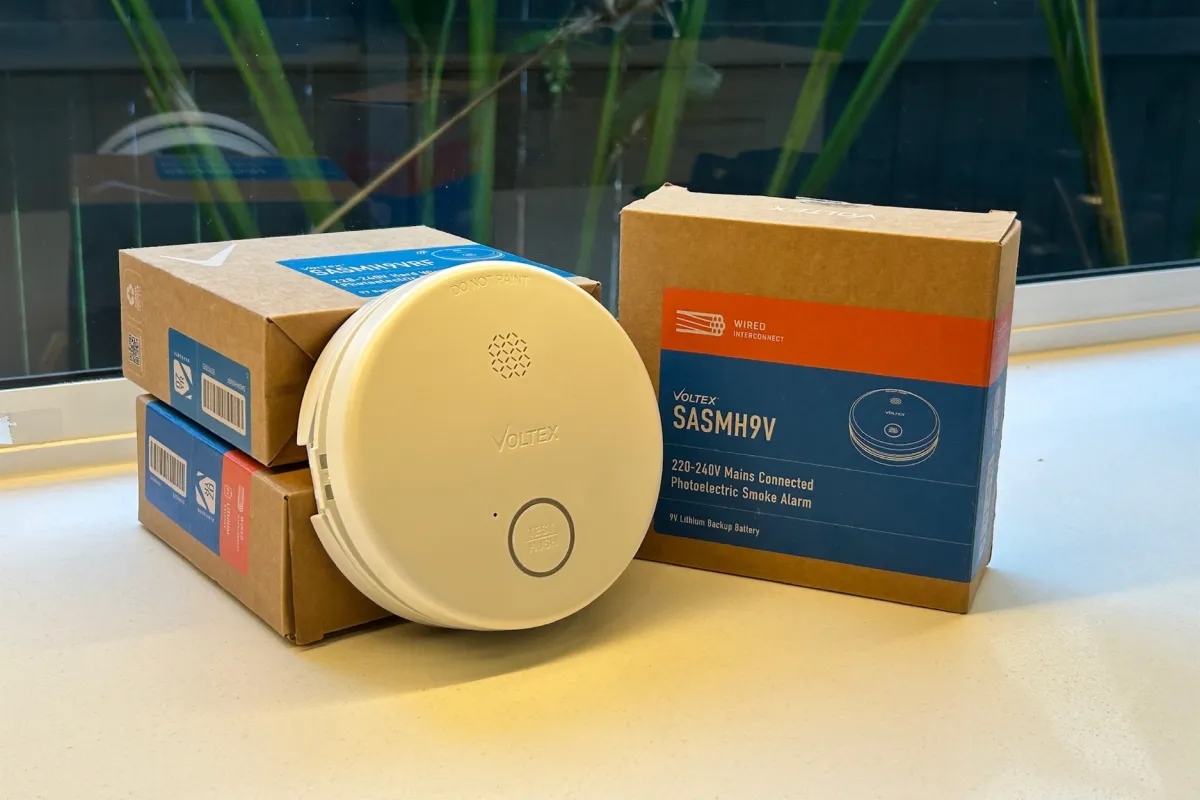
3) “What is a photoelectric smoke alarm?”

In Australian homes, photoelectric smoke alarms are now the requirement.
Photoelectric alarms work by shining a light source into a sensing chamber. When smoke particles enter this chamber, the light reflects onto the sensor triggering an alarm.
They are specifically designed to detect slow, smouldering fires, like a cigarette on a couch, overheated wiring, or a fire that starts in a wall cavity and builds slowly.
Slow, smouldering fires are the most likely occurrence in residential properties. These types of fires increase the risk of smoke inhalation and disorientation, especially when a fire starts while everyone’s asleep.
Effectively, the earlier you’re alerted there’s smoke or a fire, the more precious time you have to get your family to safety.
4) “Do smoke alarms expire? How often should I replace them?”
Yes smoke alarms expire, with a service life of 10 years.
Over time, the internal sensor becomes less reliable, even if the alarm still “tests” when you press the button.
A simple rule of thumb:
Check the manufacture date on the back of the alarm.
If it’s 10 years old, plan to replace it.
Replacing alarms before they fail is one of the easiest ways to improve safety and it can help avoid the stress of faults and nuisance alarms.
5) “Should my smoke alarms be interconnected?”
“Legislation introduced on 1 January 2017 requires all smoke alarms to comply with Australian Standard 3786-2014, and requires pre-existing smoke alarms to be replaced with interconnected smoke alarms if the smoke alarm has expired; does not work anymore and/or converting the home into a rental property.”
Queensland Fire Department

When alarms are interconnected:
If one alarm detects smoke, all alarms sound together.
This provides earlier warning throughout the home, giving everyone more time to respond.
Interconnection can be:
Hardwired interconnection (common in new builds)
Wireless interconnection (often a great option for existing homes where running new cable is difficult)
If you’re unsure what you have now, we can check your current setup and talk you through the best options for your home.
A quick checklist for homeowners:
Test your smoke alarms regularly (press the test button)
Keep alarms clean and dust-free
Replace alarms that are near or over 10 years old
Review placement, especially after renovations or layout changes
Ensure you have photoelectric and interconnected alarms
How we can help with smoke alarms at your home:

If your smoke alarms are older, unreliable, chirping, or you’re unsure whether your home is compliant and properly protected, QConnect Electrical can help.
We can:
Assess placement and coverage
Replace outdated alarms
Install photoelectric and interconnected smoke alarms
Troubleshoot nuisance alarms and faults
Call QConnect Electrical or fill out our online quote form to book your smoke alarm check.