
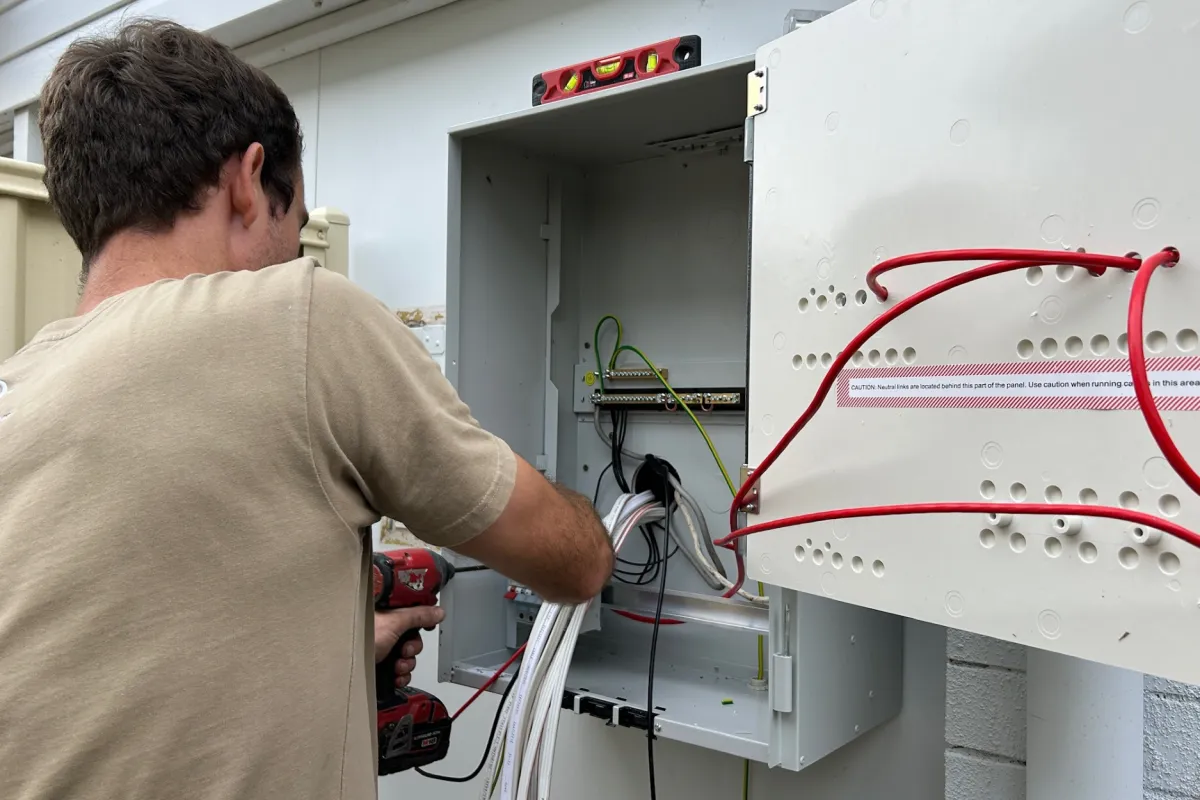
Old Switchboard? Here’s Why “It’s Been Fine So Far” Can Be a Dangerous Trap!

Switchboard upgrades aren’t just a “nice to have”, they’re one of the most important electrical improvements you can make for safety, reliability, and future-proofing your home.
If your property still has an older-style board (ceramic fuses, no safety switches, messy wiring, rust, heat marks, or mystery circuits), a modern switchboard upgrade reduces risk and give you confidence that your electrical system is built to handle today’s loads.
What a switchboard actually does (and why it matters)

Your switchboard is the control centre for your entire electrical installation. It:
Distributes power to every circuit (lights, power points, air con, oven, hot water, shed, etc.)
Houses protective devices that help prevent electric shock and fires
Provides a safe way to isolate circuits for testing, repairs, and emergencies
When the board is outdated or overloaded, small issues can turn into big ones… often with very little warning.
The big risks of an outdated switchboard
Older switchboards commonly create 3 major problems:
1. Increased fire risk
Loose connections, ageing components, heat damage, and poor circuit protection can lead to overheating and arcing faults. These issues can sit quietly for years and then suddenly show up as:
Burning smells
Discoloured plastic or scorch marks
Buzzing/crackling sounds
Frequent tripping (or worse… no tripping when there should be)
2. Reduced protection against electric shock
Modern installations rely heavily on RCD protection (often called “safety switches”) because they can disconnect power quickly when they detect leakage current, a common cause of electric shock.
If your switchboard doesn’t have adequate RCD protection across circuits, it may not meet today’s expected safety level.
3. Reliability issues that disrupt everyday life
An older board can struggle with the demand of modern living: air conditioning, induction cooktops, EV chargers, home offices, pool equipment, and bigger appliance loads.
Common warning signs include:
Flickering lights
Circuits tripping when you use multiple appliances
Power points that stop working intermittently
Heat build-up around the switchboard
No clear labelling, making faults harder to find and fix
“But will the power be off all day?”
This is one of the biggest reasons people delay switchboard work, the fear of disruption.
The reality: for many upgrades, the power is only off for parts of the day, and we plan the shutdown to minimise impact. In many cases, clients can still work from home with power on for most of the day, with only a limited outage window for critical changeover and testing.
Why a switchboard upgrade is a smart investment (beyond “it’s safer”)

A switchboard upgrade gives you benefits you’ll feel straight away:
Better safety for the whole property
A modern board can be designed with:
Correctly rated protective devices
Improved fault protection (including RCD coverage where required/appropriate)
A safer enclosure and internal layout
Clear circuit identification to reduce mistakes during maintenance
Easier fault-finding and faster repairs
When everything is neat, labelled, and protected properly, it’s quicker to troubleshoot issues, which means less downtime and fewer callouts.
Room to grow
Many switchboard upgrades include planning for future circuits and upgrades (e.g., air con, EV charger, new oven, renovations, solar changes). Doing it properly now can save money later.
What the Wiring Rules (AS/NZS 3000:2018) have to do with it
In Australia, electrical work must be carried out in accordance with applicable laws and standards.
AS/NZS 3000:2018 (the Wiring Rules) is a key benchmark for how electrical installations are to be designed and installed.

While every property is different, the standard places strong emphasis on things that directly relate to switchboards, including:
Safety of the installation overall, including protection against electric shock and fire
Correct selection and installation of protective devicesfor circuits
Switchboard construction and installation, including the need for safe access and appropriate working space for operation and maintenance
Clear marking and circuit identification, so circuits can be isolated safely and faults can be located accurately
Improved clarity on installation requirementscompared with older versions of the standard, reflecting modern equipment and real-world conditions
In plain terms: a switchboard upgrade is often the moment where an electrician can bring the “heart” of the installation up to current expectations with safer protection, clearer labelling, and a cleaner, more maintainable setup.
When should you seriously consider upgrading?
A switchboard upgrade is worth discussing if:
Your home is 20+ years old (or you’re unsure when the board was last updated)
You have ceramic fuses or no RCDs
Backing board is made of flammable material such as MDF or plywood
You’re renovating or adding large loads (air con, EV charger, new kitchen appliances)
Your circuits are unlabeled or the board looks messy/unsafe
You’ve had burning smells, heat marks, buzzing, or repeated tripping
You want confidence your installation is safe and maintainable
The bottom line
Your switchboard is not the place to “wait and see”.
A modern, compliant switchboard upgrade improves safety, reduces nuisance faults, helps protect against serious electrical incidents, and sets your property up for whatever comes next. Whether that’s a renovation, new appliances, or simply peace of mind.
If you’re unsure what you’ve got, the first step is simple: get it inspected by a licensed electrician and get clear advice on what should be improved, what can stay, and what will make the biggest difference.